
5 Signs You Are Mentally Exhausted and What to Do About It
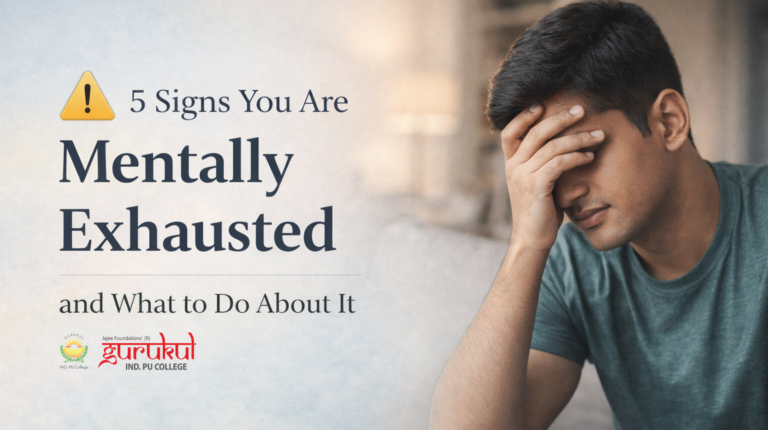
In today’s fast-paced world, mental fatigue is becoming one of the most overlooked health concerns. Whether you’re a student juggling exams and extracurriculars at Gurukul PU College, a working professional managing deadlines, or a parent balancing multiple responsibilities — mental exhaustion can creep in silently and disrupt every aspect of your life.
Recognizing the 5 Signs You Are Mentally Exhausted early can be the difference between bouncing back quickly and spiraling into burnout. This blog explores those signs in depth and offers evidence-backed strategies to help you recover and thrive.
For a broader overview of burnout and recovery, see our internal guide: Student Burnout & Recovery Guide →
Sign #1: Constant Fatigue That Sleep Doesn’t Fix
One of the most telling 5 Signs You Are Mentally Exhausted is waking up tired even after a full night’s rest. Unlike physical tiredness, mental exhaustion doesn’t vanish with sleep. Your brain remains in a state of chronic overload, unable to fully restore itself during rest.
You might notice:
• Difficulty getting out of bed despite sleeping 7–8 hours
• Feeling foggy or sluggish throughout the day
• A persistent sense of being “drained” with no clear cause
According to the American Psychological Association (APA), chronic stress is a primary driver of this type of fatigue. The APA recommends mindfulness and structured rest as key recovery tools.
At Gurukul PU College, student counselors emphasize the importance of “cognitive rest” — time away from screens and stimulating tasks. Learn more about our Student Support Programs designed to help students manage fatigue.
Sign #2: Emotional Numbness or Irritability
When you’re mentally exhausted, your emotional regulation system becomes impaired. You may find yourself snapping at loved ones over minor inconveniences, or conversely, feeling completely detached and emotionally flat — unable to feel joy, excitement, or even sadness.
Common emotional symptoms include:
• Unexplained irritability or mood swings
• Feeling emotionally “numb” or disconnected from things you love
• Increased anxiety or a constant sense of dread
• Crying spells without a clear reason
The World Health Organization (WHO) classifies emotional exhaustion as a core component of burnout syndrome, recognizing it as a legitimate occupational and academic health concern.
Related reading: Managing Anxiety as a PU Student →
Sign #3: Difficulty Concentrating or Making Decisions
Another major indicator in the 5 Signs You Are Mentally Exhausted list is “brain fog” — a state where even simple tasks feel overwhelming. You might re-read the same sentence five times, forget where you placed something seconds ago, or feel completely paralyzed when asked to make a simple choice.
Warning signs to watch for:
• Inability to focus on tasks for more than a few minutes
• Forgetfulness and poor short-term memory
• Decision fatigue — becoming overwhelmed by even small choices
• Increased mistakes in everyday tasks
A study published in the National Institutes of Health (NIH) Journal found that cognitive performance drops significantly when individuals are in a state of mental fatigue, particularly in tasks requiring sustained attention and working memory.
Gurukul PU College recommends the “Pomodoro Technique” for students experiencing brain fog — working in focused 25-minute intervals followed by 5-minute breaks. Visit our Academic Resources Hub for more productivity strategies.
Sign #4: Physical Symptoms Without a Medical Cause
The mind and body are deeply interconnected. Mental exhaustion often manifests as physical complaints that have no identifiable medical origin. Doctors sometimes call these “psychosomatic symptoms” — real, physical pain triggered by psychological stress.
Common physical manifestations:
• Frequent headaches or migraines
• Tight chest, shallow breathing, or heart palpitations
• Gastrointestinal issues such as nausea, constipation or irritable bowel
• Muscle tension especially in the neck, shoulders, and jaw
• Lowered immunity — getting sick more frequently than usual
The Mayo Clinic provides a comprehensive overview of how chronic stress and mental exhaustion manifest physically, and strongly advises seeking professional evaluation when these symptoms persist.
If you’re a student at Gurukul PU College experiencing these symptoms, our campus health center offers both physical and mental health consultations. See our Campus Health & Wellness Center →
Sign #5: Withdrawal from Social Life and Loss of Motivation
The fifth and perhaps most socially impactful of the 5 Signs You Are Mentally Exhausted is pulling away from relationships and losing interest in activities you once loved. This isn’t introversion — it’s a protective mechanism your overwhelmed brain uses to conserve energy.
Behavioral red flags include:
• Canceling plans repeatedly and preferring isolation
• Loss of interest in hobbies, sports, or social events
• Feeling like a burden to others
• Procrastinating on important responsibilities indefinitely
• Neglecting personal hygiene or self-care routines
Research from Harvard Health Publishing shows that social withdrawal during periods of stress can actually worsen mental exhaustion by reducing access to supportive relationships, which are a crucial buffer against burnout.
What to Do About Mental Exhaustion
Recognizing these 5 Signs You Are Mentally Exhausted is only the first step. Recovery requires intentional effort across multiple dimensions of wellbeing. Here are evidence-backed strategies to help you reclaim your mental energy:
1. Prioritize Sleep Hygiene
Quality sleep is the foundation of mental recovery. Aim for 7–9 hours per night in a cool, dark room. Avoid screens for at least one hour before bed. The National Sleep Foundation offers detailed guidance on optimizing sleep for mental health.
2. Practice Mindfulness and Meditation
Even 10 minutes of daily mindfulness meditation has been shown to reduce cortisol levels and improve cognitive clarity. Apps like Headspace or Calm can guide beginners. For a structured program, visit Mindfulness-Based Stress Reduction (MBSR) offered by UMass Medical School.
3. Set Boundaries and Reduce Your Load
Learn to say no. Overcommitment is one of the leading causes of mental exhaustion. Review your schedule honestly and eliminate or delegate non-essential tasks. Gurukul PU College’s counseling team offers free workshops on Time Management & Boundaries for all enrolled students.
4. Move Your Body
Physical exercise is one of the most powerful antidepressants available. Even a 30-minute walk can significantly reduce mental fatigue. The Mental Health Foundation UK provides extensive research on the mental health benefits of regular physical activity.
5. Seek Professional Support
If your symptoms persist for more than two weeks, it’s essential to consult a mental health professional. Therapy, particularly Cognitive Behavioral Therapy (CBT), has strong evidence for treating burnout and mental exhaustion. You can find licensed therapists through Psychology Today’s Therapist Finder.
Students at Gurukul PU College have access to confidential counseling services. Book an appointment through our Online Counseling Appointment Portal →
How Gurukul PU College Supports Student Mental Health
At Gurukul PU College, we believe that academic excellence and mental wellbeing go hand in hand. Our holistic student development approach integrates mental health awareness into the curriculum and campus culture. We offer:
• Free confidential counseling sessions with certified therapists
• Weekly peer support groups facilitated by trained student mentors
• Mindfulness and yoga sessions every Tuesday and Thursday morning
• Mental health awareness workshops and seminars each semester
• A dedicated 24/7 student helpline for crisis support
We encourage every student who identifies with the 5 Signs You Are Mentally Exhausted to reach out proactively. You don’t have to wait until you’re in crisis. Learn more about our comprehensive mental wellness programs on the Gurukul PU College Mental Health Page →
Conclusion
Mental exhaustion is not a weakness — it is a signal from your body and mind that something needs to change. The 5 Signs You Are Mentally Exhausted — constant fatigue, emotional dysregulation, difficulty concentrating, unexplained physical symptoms, and social withdrawal — are all messages worth listening to.
By recognizing these signs early and taking deliberate steps toward recovery — including rest, movement, mindfulness, boundary-setting, and professional support — you can restore your mental energy and regain your sense of purpose and joy.
At Gurukul PU College, your mental health is our priority. If you’ve found this article helpful, share it with a friend who may be struggling. And remember: asking for help is always the strongest thing you can do.
Subcribe Our Newsletter
Work Hours
- Mon - Fri :
- Sunday :
- 10.00 AM - 05.30 PM
- Closed