
Cybersecurity Basics Every Pu Student Should Know
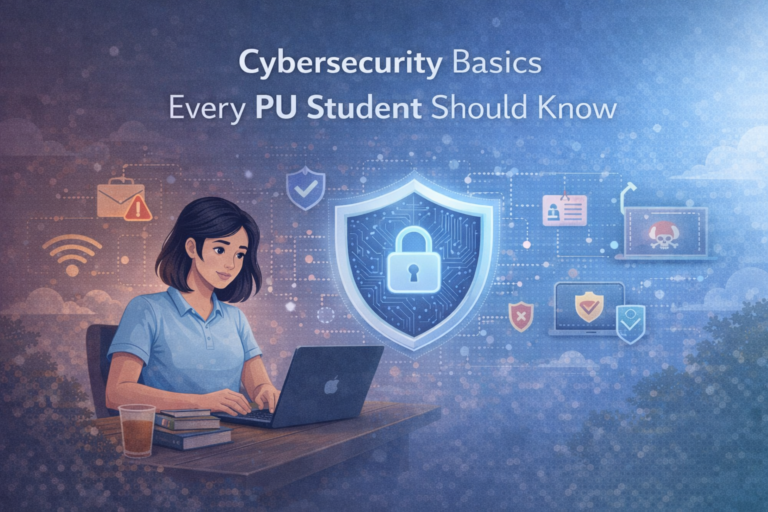
You use your phone for over 6 hours a day — scrolling, studying, chatting, gaming. But here is the real question: do you know who else might be watching?
Cybercrime is no longer something that only happens to big companies or government agencies. Today, students are among the most targeted groups online. From phishing scams to fake Wi-Fi hotspots, the digital threats are real, growing, and very close to home.
At Gurukul PU College, we believe that every student deserves to feel safe — not just inside the classroom, but in the digital world too. That is why we have put together this complete, beginner-friendly guide on Cybersecurity Basics — everything a PU student needs to know to stay protected online.
“The internet is your most powerful tool. Protect it like you protect your future.” — Gurukul PU College
What Are Cybersecurity Basics and Why Do They Matter for Students?
Cybersecurity is the practice of protecting your devices, data and online identity from digital attacks, theft, and damage. In simple terms — it is everything you do to keep yourself safe on the internet.
You might think: “I am just a student. Why would anyone target me?” Here is the truth — cybercriminals specifically look for easy targets. And students, who are constantly online but often unaware of risks, are perfect targets.
Here is why PU students are especially vulnerable:
• Using shared or unsecured college Wi-Fi networks
• Sharing notes, files and links with classmates without verifying sources
• Spending long hours on social media and gaming platforms
• Downloading free apps, tools or study material from unofficial sources
• Using the same password across multiple apps and websites
According to the Cybersecurity & Infrastructure Security Agency (CISA), over 30% of cyberattacks now target young adults and students. Understanding Cybersecurity Basics is the first and most important step toward staying safe.
Common Cyber Threats Every PU Student Must Recognize
Before you can protect yourself, you need to know what you are protecting yourself from. Here are the most common cyber threats that students face today:
1. Phishing Attacks
Phishing is when a cybercriminal sends you a fake email, message or link that looks completely real — but is designed to steal your passwords, bank details, or personal information.
Example: You receive an email saying “Your college account will be deactivated in 24 hours. Click here to verify.” You click, enter your login details — and now a hacker has them.
Test your phishing awareness with this free interactive tool: Google’s Phishing Quiz — it takes just 5 minutes and could save you from a major attack.
2. Weak Passwords
Using passwords like ‘12345’, ‘password’ or your own name is like leaving your front door wide open. Weak passwords are the number one way hackers gain access to student accounts.
3. Unsecured Public Wi-Fi
That free Wi-Fi at the café or college canteen? It could be a trap. Hackers can set up fake hotspots with legitimate-sounding names to intercept your data.
Learn more about staying safe on public networks: Norton’s Guide to Public Wi-Fi Safety.
4. Malware & Fake Apps
Malware is malicious software that secretly installs itself on your device — usually through suspicious links, email attachments, or fake apps. Signs your device may be infected include sudden slowdowns, unusual pop-ups, and apps you never installed.
5. Social Engineering
This is when a criminal psychologically manipulates you into giving up your personal information. They may pretend to be a classmate, a teacher, or even a college staff member. If someone is urgently asking for your personal details — stop, verify and think.
10 Cybersecurity Basics Every PU Student Must Follow Right Now
These are the core Cybersecurity Basics that every student should practise daily. Think of these as your personal digital safety rulebook:
1. Use strong, unique passwords for every account — mix uppercase, lowercase, numbers, and symbols.
2. Enable Two-Factor Authentication (2FA) — adds an extra layer of security to your accounts.
3. Never click on unknown links or pop-ups — if it looks suspicious, it probably is.
4. Keep your phone and laptop software updated — updates often fix security vulnerabilities.
5. Only download apps from official stores — Google Play, Apple App Store, or verified sources.
6. Use a VPN on public Wi-Fi — it encrypts your connection and protects your data.
7. Don’t overshare on social media — your school name, address, and daily routine can be used against you.
8. Always log out of accounts on shared or college computers — do not save passwords on public devices.
9. Regularly back up important files — use Google Drive, OneDrive, or an external hard drive.
10. Report suspicious activity immediately — tell your teacher, parent, or Gurukul PU College’s IT support team.
For more tips and resources, visit StaySafeOnline.org — National Cybersecurity Alliance, one of the most trusted cybersecurity awareness organizations in the world.
How Gurukul PU College Is Building Digitally Safe Students
Gurukul PU College has always believed in education that goes beyond textbooks. In today’s digital-first world, that means preparing students not just academically, but also digitally.
Here is how Gurukul PU College is making a difference:
• Digital Literacy Workshops: Regular sessions on online safety, responsible digital behaviour, and cyber hygiene.
• Integrated IT Curriculum: Computer Science and IT courses that cover Cybersecurity Basics as part of the syllabus.
• Safe Internet Usage Policy: Clear guidelines for students on the responsible use of college Wi-Fi and digital resources.
• IT Support & Incident Reporting: A dedicated support system where students can report suspicious online activity and get immediate help.
• Awareness Campaigns: Posters, blog posts, and events during Cyber Awareness Month every October.
At Gurukul PU College, we don’t just teach students to score marks — we teach them to thrive in the real world. And in today’s world, that means being digitally safe and responsible — Faculty, Gurukul PU College
Free Cybersecurity Resources Every Student Should Bookmark
The best part about learning Cybersecurity Basics today? You do not need to spend a single rupee. Here are the best free resources available online:
• Google Digital Garage — Free cybersecurity and digital safety courses. Visit: learndigital.withgoogle.com
• Cybrary — Beginner cybersecurity lessons and certifications. Visit: cybrary.it
• Khan Academy — Internet safety basics for all ages. Visit: khanacademy.org
• CERT-In India — India’s official cybersecurity body and alerts. Visit: cert-in.org.in
• Coursera — Free cybersecurity courses from top universities worldwide. Visit: coursera.org
I Think I’ve Been Hacked — What Should I Do?
Even if you follow every rule in this guide, things can still go wrong. If you ever suspect your device or account has been compromised, here is exactly what to do — step by step:
11. Disconnect from the internet immediately — turn off Wi-Fi and mobile data on your device.
12. Change all your passwords from a clean, safe device — prioritise email, social media, and banking apps.
13. Check for unrecognised activity — look for unfamiliar logins, sent messages, or transactions.
14. Inform your parents and college authorities — do not try to handle it alone.
15. Scan your device with a trusted antivirus tool — remove any malware found.
16. Report the incident to authorities — file a complaint immediately.
India has a dedicated portal for reporting cyber crimes: India Cyber Crime Reporting Portal — cybercrime.gov.in. You can also call the Cyber Crime Helpline at 1930 — it is free, available 24/7, and completely confidential.
Remember — reporting a cybercrime is not something to be embarrassed about. It is the brave and responsible thing to do, and it helps protect others too.
Start Practising Cybersecurity Basics Today — Your Digital Safety Depends on It
Cybersecurity Basics are not just for computer science students or future engineers. They are for every single person who owns a phone, uses the internet or has an email account — which means they are for you.
You do not need to be a tech expert to protect yourself online. You just need to be aware, careful, and consistent. The 10 rules in this guide are simple enough to start today — and powerful enough to keep you safe for years to come.
At Gurukul PU College, our mission is to produce students who are not just academically excellent, but also digitally responsible, globally aware, and future-ready. Digital safety is part of that mission — and it starts with you.
“The internet is your most powerful tool. Protect it like you protect your future.”
Share this blog with your classmates — because digital safety is a team effort.
FAQ
Popular Question
Cybersecurity Basics refer to the essential practices and knowledge needed to protect your devices, personal data, and online identity from cyber threats like hacking, phishing, and malware attacks.
Common threats include phishing emails, weak passwords, fake Wi-Fi networks, malware and social engineering scams that trick users into sharing sensitive information.
Students are frequent targets of cyberattacks because they spend a lot of time online, use shared networks, and often lack awareness about digital risks. Learning Cybersecurity Basics helps them stay safe and protect their personal information.
Use a mix of uppercase and lowercase letters, numbers and symbols. Avoid using personal details like your name or birthdate, and never reuse the same password across multiple accounts.
Subcribe Our Newsletter
Work Hours
- Mon - Fri :
- Sunday :
- 10.00 AM - 05.30 PM
- Closed