
How can I make the most of whatever college I choose?
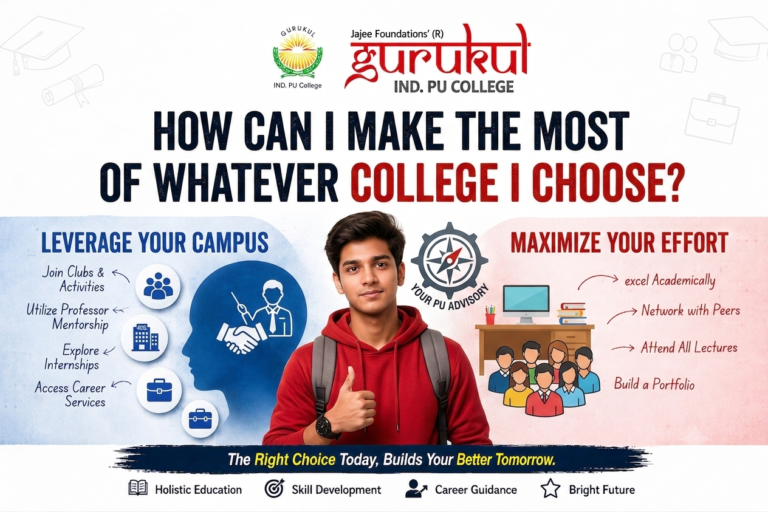
“Did I pick the right college?” is probably the question we hear most from incoming PU students and their parents once admission letters go out. It’s a fair worry, but it’s aimed at the wrong variable. After sitting through hundreds of admissions conversations and watching where students land five and ten years later, one pattern holds up again and again: how can I make the most of whatever college I choose matters far more to your future than which college’s name ends up on your certificate. That isn’t a comforting slogan — it’s the conclusion of one of the largest studies ever done on this exact question. Below is what that research actually says, and what it looks like in practice, whether you’re headed into a large university, a specialised professional course, or a smaller, community-rooted PU college.
What the Research Actually Says About “Which College Matters”
In 2014, Gallup partnered with Purdue University and the Lumina Foundation on a survey of roughly 30,000 U.S. college graduates — not just asking whether they had jobs, but whether they had genuinely good ones, and genuinely good lives (Gallup, “Life in College Matters for Life After College”). The finding surprised plenty of university administrators: the type of institution a graduate attended — public or private, large or small, highly selective or not — had far less bearing on their later well-being and work engagement than the specific experiences they had as students.
Gallup narrowed those experiences down to six factors, now widely referred to as the “Big Six”: having at least one professor who made learning genuinely exciting, having a professor who cared about the student as a person, finding a mentor who pushed them toward their own goals, working on a project that stretched across a full semester or longer, holding an internship or job where they could apply what they were studying, and being deeply involved in extracurricular activities. Graduates who had experienced all six were surprisingly rare — only about 3% of everyone surveyed — yet each factor on its own was tied to noticeably better outcomes. If you’re still weighing colleges, Purdue put together a short set of questions worth asking on a campus visit that maps directly onto these six factors (Purdue’s college-selection checklist).
Find One Professor Who Actually Knows Your Name
Of the six factors, a real relationship with faculty came with an outsized payoff. Graduates who’d had a professor who cared about them personally were substantially more likely to be engaged in their careers years later, and those who’d found a mentor who actively encouraged their goals saw an even bigger jump in long-term well-being. None of that requires a famous university. It requires showing up to office hours, asking a real question after class instead of leaving the second the bell rings, and treating your lecturers as people worth knowing rather than obstacles between you and a mark sheet.
Get Real Experience Before You Graduate, Not After
An internship, apprenticeship, or part-time role where you actually apply what you’re studying is one of the strongest predictors in the Gallup data of a smooth transition into work. Employers back this up directly: the National Association of Colleges and Employers has spent nearly a decade identifying eight specific “career readiness” competencies — critical thinking, teamwork, professionalism and communication among them — that recruiters consistently screen for, often ahead of the degree itself (NACE Career Readiness Competencies). We’ve written more about how skills stack up against credentials in employers’ eyes, if you want the fuller picture: Do employers care more about skills or college credentials?.
Commit to One Thing Outside the Classroom
Extracurricular involvement made Gallup’s Big Six for a reason: clubs, sports, student council, or a college magazine are where students practise leadership, teamwork, and follow-through in ways a syllabus rarely teaches directly. The operative word is committed — one activity you stick with for a full year is worth more here than five you try and drop within a month.
Treat Study Hours Like a Job, Not an Afterthought
Most first-year students underestimate how much unscheduled work college actually requires. Academic success centres generally recommend budgeting two to three hours of independent study for every hour spent in class, meaning a full course load can realistically mean well over 25–30 hours of work outside timetabled classes each week (University of Tennessee Academic Success Strategies). Building a weekly schedule around that number — rather than discovering it the week before final exams — is one of the simplest changes that separates a stressful semester from a manageable one.
Don’t Treat Your Mental Health as Optional
Academic pressure is real, and pretending otherwise doesn’t help anyone. The most recent nationwide Healthy Minds survey found only about a third of college students describe themselves as thriving, while just over half say they even know where to find mental health support on their own campus (Inside Higher Ed, on the 2024–25 Healthy Minds Study). That gap between need and awareness matters — a wellness centre or counsellor you never visit doesn’t help you. Whatever your college offers on this front, know where it is before you need it, not after.
Use What Your College Has Actually Built for You
This is where the specific college you attend starts to matter again — not because of its name, but because of whether it has genuinely built the infrastructure behind the Big Six experiences above. At Gurukul Independent PU College in Kalaburagi, for instance, that shows up as merit-based scholarships for students who might otherwise struggle to access them, smart classrooms designed around real engagement rather than one-way lecturing, and wellness programmes aimed at students and faculty alike (more about the college). None of this is unique to one institution, but it’s exactly the kind of support worth checking for at whichever college you land in — and then actually using once you’re there. You can browse the Science and Commerce programmes on offer, or get in touch with the admissions team directly if you’re still deciding.
A Short Checklist for Your First Semester
• Introduce yourself to at least one professor by name within the first month.
• Apply for one internship, project, or on-campus role tied to your subject before your second year.
• Pick one club or activity, and commit to it for a full year rather than sampling five.
• Block out weekly study hours on a real calendar — don’t wing it.
• Write down exactly where your college’s counselling or wellness office is, before you ever need it.
• Revisit this list at the end of every semester and adjust it honestly.
The Bottom Line
There isn’t a version of “how can I make the most of whatever college I choose” that starts with transferring to a more prestigious school. It starts with the professor you talk to next week, the internship you apply for next semester, and the club meeting you actually show up to on Tuesday. It also helps to pick a place where location itself won’t hold you back — we’ve covered that question separately here: Do I need to attend college in a big city to get better opportunities?. The research is unusually consistent on one point: the college matters less than what you actually do inside it.
FAQ
Popular Question
You can make the most of whatever college you choose by actively participating in classes, building relationships with professors, joining student clubs, gaining internship experience, developing practical skills, and maintaining a consistent study routine. Your involvement and effort often have a greater impact than the college's reputation.
Students should join clubs, sports, student organizations, workshops, volunteer programs, and internships. These activities help improve leadership, communication, teamwork, and problem-solving skills that employers value.
Create a weekly study schedule, attend every class, ask questions, seek guidance from professors, complete assignments on time, and review your subjects regularly instead of studying only before exams.
Not entirely. While a good college provides opportunities, your success depends more on how you use the available resources. Developing skills, networking, participating in extracurricular activities, and gaining real-world experience play a significant role in long-term career growth.
Internships provide practical experience, help you apply classroom knowledge, improve your resume, build professional connections, and increase your chances of securing a job after graduation.
Professors and mentors can guide your academic journey, recommend internships, provide career advice, and help you develop the skills needed for future success. Building these relationships can greatly benefit your personal and professional growth.
Subcribe Our Newsletter
Work Hours
- Mon - Fri :
- Sunday :
- 10.00 AM - 05.30 PM
- Closed