Walk into any PU classroom in June and you’ll see two kinds of students. Some sit upright, ready to ask questions. Others hope the teacher won’t look their way. The difference is rarely intelligence. It’s confidence.
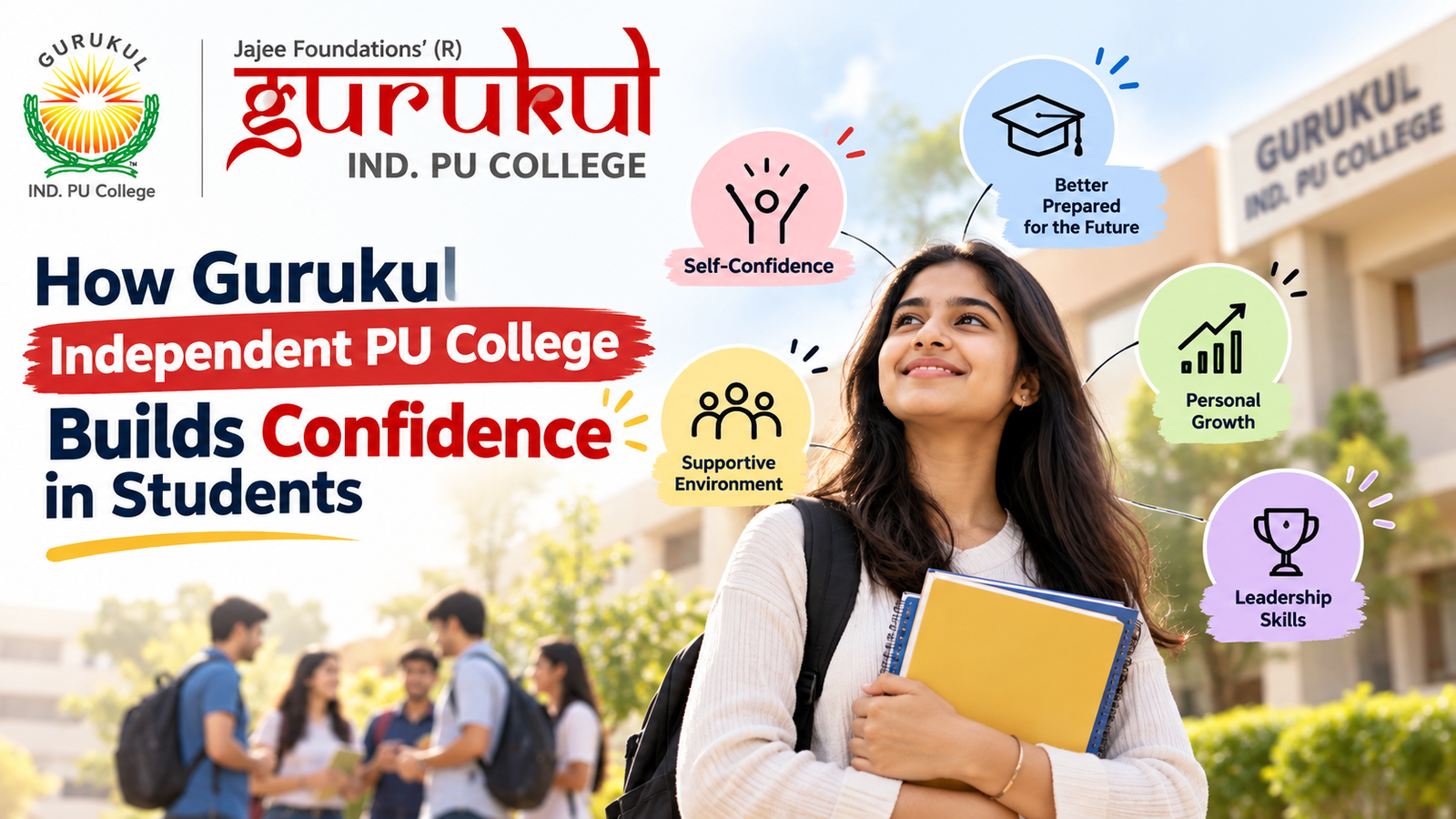
That’s why Gurukul Independent PU College in Kalaburagi treats confidence as something to be built, not something students are simply born with. Here’s how Gurukul Independent PU College builds confidence in students, day by day.
Why Confidence Matters in Pre-University Years
The two years of PUC are a big jump from Class 10. The syllabus gets heavier, and board exams, JEE, NEET and CET all start to feel close. Research on academic self-efficacy, a student’s belief that they can handle a given task, links it to motivation, persistence and academic achievement. Students who believe they can improve usually do.
1. Mentoring That Feels Personal
Gurukul’s faculty team supports students through the learning process with care, and mentoring is a core part of the teacher-student relationship. When a student knows a teacher is paying attention, asking “silly” doubts gets easier. That’s where confidence starts.
2. Small Wins, Tracked Clearly
The college uses a tech-enabled platform for student performance analysis, so progress is visible. A student who sees their test score improve in Physics feels it and wants to keep going. Regular parent-teacher meetings and daily SMS updates keep families in the loop, so encouragement at home matches what happens in class.
3. Learning That Goes Home With Them
The GURUKUL app puts chapter synopses, homework clarification, tests and live analytics in the student’s hands. Revising at your own pace, without fear of being judged, builds quiet, steady confidence before exams.
4. Hands-On Labs and Real Practice
Well-equipped labs let students test theory themselves. When a concept works in front of your eyes, it sticks, and so does the belief that you understand it. You can read more about the college’s approach on the Gurukul PU College landing page, which also covers merit-based scholarships and the Gurukul Eligibility Entrance Test (GEET).
5. Life Beyond the Classroom
Cultural programmes and co-curricular activities give students a chance to perform, lead and be seen. A student who is nervous in class often finds their voice on stage, and it carries back into the classroom. The college also talks about a balance between academic brilliance and co-curricular life, so that students “come with a smile and leave with a smile.”
The Results Speak
Gurukul reports that its students perform strongly in Board Exams and in competitive exams including JEE Main, JEE Advanced, NEET, CET and CA Foundation. Confidence isn’t the only reason, but it’s a big part of it.
Choosing the Right PU College
If you’re comparing options, start with the official Department of Pre-University Education, Karnataka website for admission and exam guidelines. Then look beyond marks. Ask how a college supports students who are struggling, and whether they feel heard. You can also read our guide to the top PU colleges in Kalaburagi or learn more about Gurukul.
Final Thoughts
Gurukul Independent PU College builds confidence in students through caring mentors, clear feedback, practical learning and a campus where they can grow as people, not just as test-takers. Ready to take the next step? Contact Gurukul PU College to ask about admissions.