

- +91 9606457774
- infogdc@gurukul.edu.in
- Mon - Sat : 09.30AM - 05.00PM
You’ve probably heard it a hundred times: “Get a degree and you’ll land a good job.” But is that actually true? And if so — how exactly does spending three years in a degree college translate into real workplace readiness?
The honest answer is: it depends on the college and the curriculum. But when done right, a degree education does far more than hand you a certificate. It builds the skills, mindset, and network that employers genuinely look for. Here’s a straight-talking breakdown.
The biggest misconception about college is that it’s about memorising facts. The real value lies in learning how to analyse problems, evaluate information, and make decisions under pressure. Whether you’re studying BBA (Bachelor of Business Administration) or B.Com (Bachelor of Commerce) your coursework constantly pushes you to think critically — a skill every employer ranks as a top priority. According to the National Association of Colleges and Employers (NACE), critical thinking is one of the eight core competencies that define career-ready graduates.
Good degree programmes aren’t designed in a vacuum. They’re built around what industries actually need. At Gurukul Degree College, the BBA and B.Com programmes are structured to give students exposure to:
• Financial accounting and taxation (B.Com)
• Business strategy, HR, and marketing (BBA)
• Entrepreneurship and business communication
• Economics, statistics, and data interpretation
These aren’t just academic subjects — they’re the exact tools used in finance firms, startups, and corporate offices every single day.
Classroom learning only gets you so far. What separates truly Job-Ready Graduates from the rest is applied experience. Degree colleges that integrate internship programmes, live projects, and industry visits give students a massive head start.
When students complete internships during their BBA or B.Com, they’re not just adding a line to their CV — they’re building actual professional habits: meeting deadlines, working in teams, dealing with feedback, and navigating real workplace dynamics. The World Economic Forum’s Future of Jobs Report consistently highlights adaptability and collaboration as the most sought-after traits in new hires.
No employer hires a robot. Alongside technical knowledge, companies want people who can communicate clearly, lead when needed, and work well with others. Three years of degree education — with group assignments, presentations, debates, and seminars — quietly builds exactly these skills.
At Gurukul Degree College, students regularly engage in activities that sharpen communication, problem-solving, and leadership skills. These aren’t add-ons — they’re built directly into how the programme is delivered.
Your first job rarely comes from sending out 200 cold applications. It comes from who you know and who knows you. Degree colleges with active placement cells, alumni networks, and industry tie-ups give students a significant advantage in getting that first break.
Colleges like Gurukul maintain relationships with businesses and recruiters who actively seek BBA and B.Com graduates — not just any graduate, but students who’ve been prepared with the right skills and attitude for professional life. This is what turns a degree into a doorway.
Here’s something nobody tells you enough: completing a three-year degree is itself a signal. It tells employers you can set a long-term goal, stay consistent, manage multiple deadlines, and follow through. In a world of short attention spans, that matters.
It’s not just about what you learned — it’s about what you proved by finishing. Employers know that. And research from LinkedIn’s Workforce Report shows that structured educational backgrounds consistently correlate with higher retention rates at companies — which is why hiring managers still value them.
Both are excellent choices, but they point in slightly different directions:
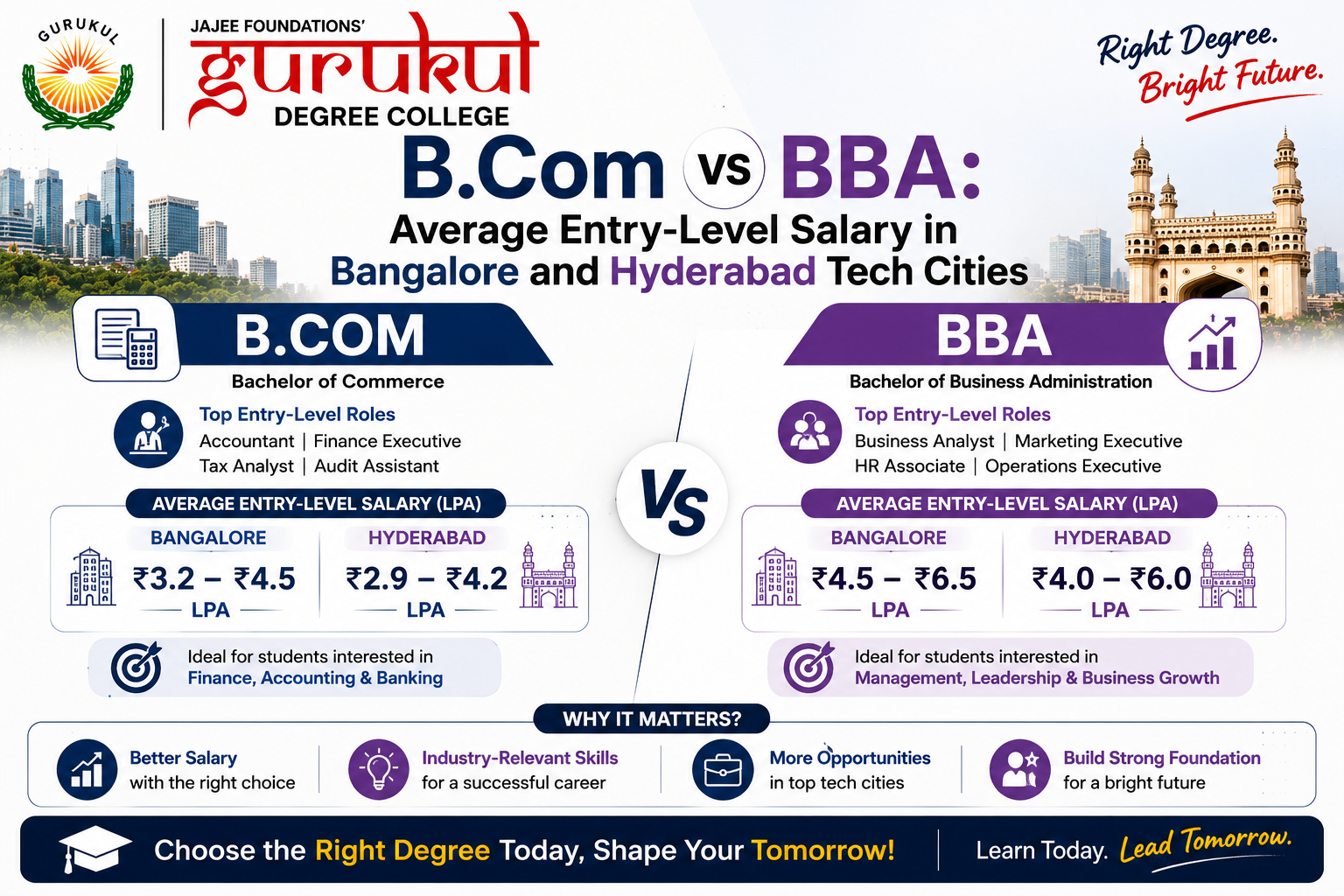
•Choose BBA if you’re drawn to management, entrepreneurship, marketing or HR. It’s ideal for students who want to lead businesses or build their own.
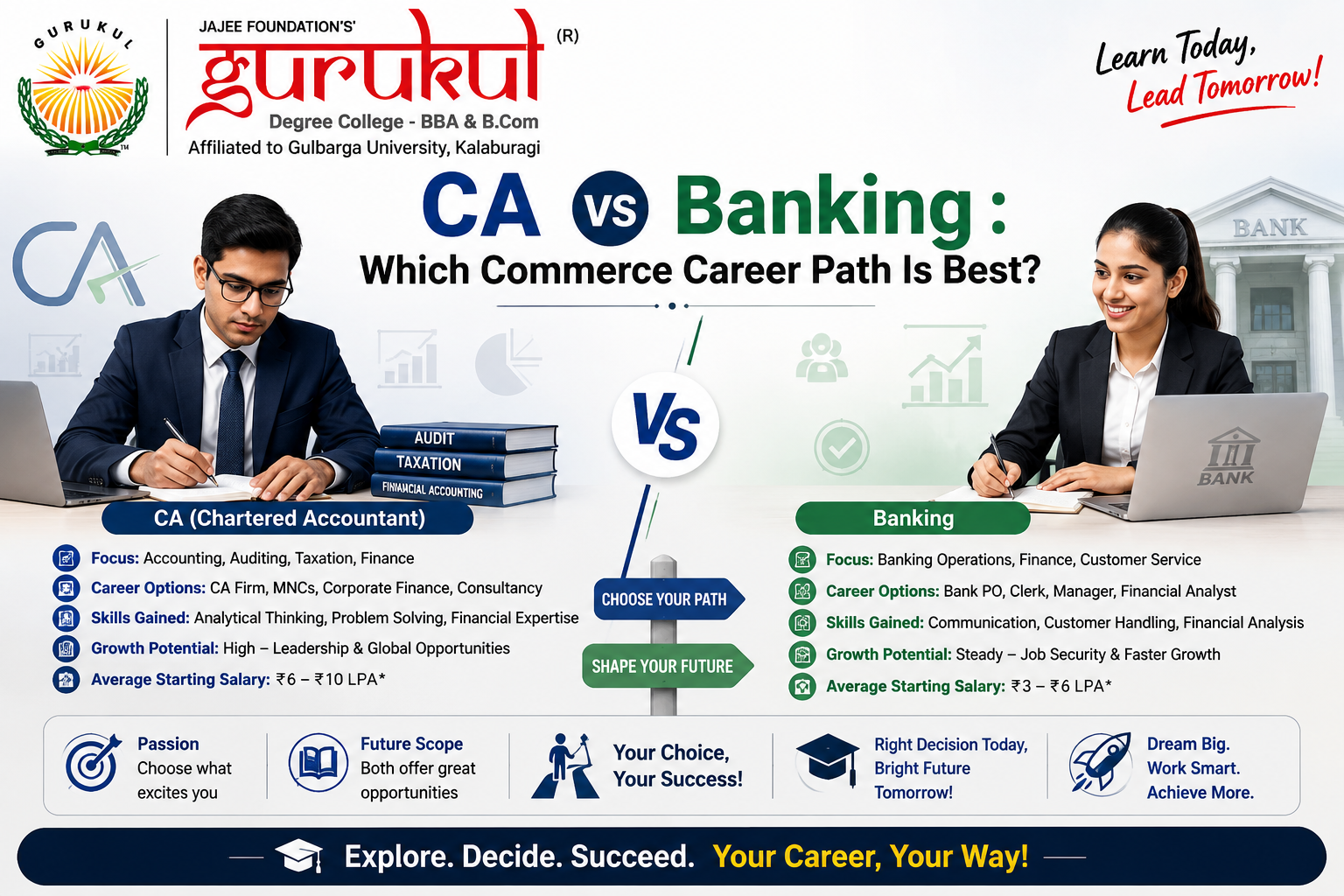
•Choose B.Com if you love finance, accounting, taxation, or economics. It’s the foundation for CA, MBA Finance, banking, or corporate finance roles.
Gurukul Degree College offers both — and the faculty, curriculum, and placement support are designed to make you workplace-ready by the time you graduate. Whether you’re still deciding or have already made up your mind, learn more about the BBA programme at Gurukul or explore the B.Com programme at Gurukul.
Degree college education, when it’s done right, is one of the most effective ways to become genuinely career-ready. It’s not just about the certificate hanging on the wall — it’s about the thinking skills, practical experience, soft skills, and networks you build on the way there.
The goal isn’t just to graduate. The goal is to graduate as one of those Job-Ready Graduates who walks into an interview room with confidence, competence, and something real to offer.
If you’re serious about that outcome, choose a college that’s serious about getting you there. Gurukul Degree College is built exactly for that purpose.
Ready to take the next step? Explore Gurukul Degree College →


Stay Updated with Gurukul Degree College